
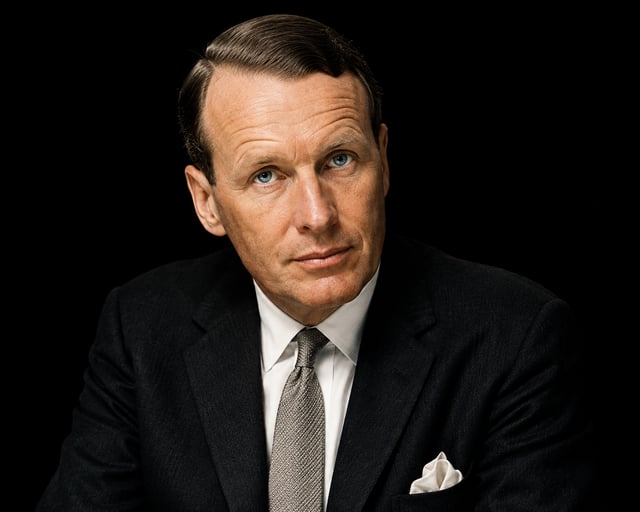
David Ogilvy — Founder of Ogilvy & Mather, the father of advertising

Communication

🇬🇧 David Ogilvy(b. 1911)

Founder of Ogilvy & Mather, the father of advertising

David Ogilvy pioneered modern advertising, building an empire that fused creativity with rigorous research and salesmanship.

“The consumer is not a moron, she is your wife.”

8 Courses · 40 Lessons · 5 Hours

30-day money-back guarantee

Biography

The story of David Ogilvy, from the beginning.

01

Origins

David Ogilvy (1911-06-23–present) did not arrive at the top of communication through privilege or a shortcut. The early years were unglamorous: long stretches of obscurity, work nobody applauded, and an obsession with a single question that most people around them considered a strange thing to care about. What separated them from equally talented peers was not raw ability but the decision, taken very early, to go deeper than anyone else was willing to go on art of persuasion — and to keep going long after the initial excitement wore off.


02

The turning point

David Ogilvy pioneered modern advertising, building an empire that fused creativity with rigorous research and salesmanship. That is the moment the trajectory changes. Until then they were a promising name; afterwards they became the reference point. The insight itself was simple enough to explain in a sentence, which is exactly why it was so easy for everyone else to dismiss it. They did not dismiss it: they bet their time, their reputation and often their money on it, and then defended it publicly while it was still unproven. Founder of Ogilvy & Mather, the father of advertising

03

The rise

What followed was a body of work built over years, not months, concentrated on art of persuasion, advertising, copywriting. Each phase came with public setbacks — a failed project, a period of stagnation, a decision the market or the press punished before it was proved right. They kept the same standard through all of it. The record people admire today is not a single lucky breakthrough but the compounding of hundreds of unglamorous decisions made in the same direction, repeated while competitors rotated to whatever felt easier that year.

04

The method

Their approach — Founder of Ogilvy & Mather, the father of advertising — reduces to a handful of rules applied with unusual discipline: absurdly high standards on quality, honest measurement of results, the willingness to kill what is not working early, and the courage to double the commitment to what is. In practice this means working relentlessly across art of persuasion, advertising, copywriting, consumer psychology, ogilvy on advertising, turning abstract principles into daily routines. They optimise for the decisions that matter most and deliberately ignore almost everything else, which is why their output looks simple from the outside and is nearly impossible to copy from the inside.

05

Setbacks and the cost

No serious career is linear, and theirs was not either. There were years of doubt, rivals who moved faster, criticism from people whose opinion mattered to them, and at least one moment where quitting would have been the reasonable choice. The interesting part is not that they suffered these things but how they processed them: as information rather than as verdicts. Mistakes were dissected in public, assumptions were rewritten, and the method that made them famous is largely a list of scars turned into rules.

06

What you actually learn from them

Studying David Ogilvy is not about imitating a personality; it is about extracting transferable judgement. How they decided what to work on, how they evaluated risk, how they handled being wrong, how they built the people and systems around them, and how they protected the long horizon against short-term pressure. Those judgements travel across industries — that is why their frameworks still hold up decades after the specific context that produced them disappeared.

07

Today and the legacy

Their influence now exceeds their own results: the approach is studied, imitated and taught, and entire careers have been built on ideas they made ordinary. At Tiptico we have gone through their decisions, interviews, letters and failures and rebuilt them as step-by-step frameworks you can apply to your own work — the reasoning, not just the highlights.

Tiptico analysis

An advertising man who insisted, against his industry, that the job is to sell — and that research beats taste in deciding how.

Ogilvy came to advertising via door-to-door stove sales and Gallup's research department, and both show in the method: know the product exhaustively, respect the reader's intelligence, and measure. Tiptico's analysis extracts the parts that transfer to modern marketing and notes which of his specific rules were artefacts of print media rather than principles.

  • Advertising and copywriting
  • Brand image
  • Direct response
  • Consumer research
  • Positioning
  • Creative discipline

The headline carries the campaign

Ogilvy's most-cited finding is that roughly five times as many people read the headline as read the body copy, which makes it the majority of the media spend. His headlines led with news, specificity or the reader's self-interest rather than cleverness — 'At 60 miles an hour the loudest noise in this new Rolls-Royce comes from the electric clock' is a factual detail chosen for its implication, not a slogan. The transferable rule is that concreteness outperforms wit when the goal is a sale.

  • Specificity is more persuasive than superlatives.
  • Cleverness that obscures the offer is a cost, not a creative asset.
  • The first line's job is to earn the second, not to win an award.

Research before creative

Ogilvy required an exhaustive study of the product and the existing advertising in the category before writing — his account of spending three weeks reading about Rolls-Royce before finding the clock line is the emblematic story. The discipline is that the insight is usually already present in the product or the customer's language, and the writer's job is retrieval rather than invention.

Brand image as a long-term asset

He argued that every advertisement is a contribution to a brand's accumulated image, so inconsistency spends money twice. Hathaway's eyepatch and Schweppes's Commander Whitehead created continuity a single campaign cannot buy. This is the strategic counterweight to his direct-response training: one measures the immediate sale, the other builds the asset that makes future sales cheaper.

Direct response, and what he thought of people who ignored it

Ogilvy called direct response his 'secret weapon' and criticised general advertisers for not learning from the only discipline with real feedback. Long copy outperforming short in his tests, testing headlines against sales rather than opinion, and refusing to run what could not be justified are the ancestors of modern performance marketing.

What was of its era

Rules about column widths, serif typefaces and photograph placement were empirical findings about print in the 1950s and 60s, not laws. Read the specific tactics as evidence of a method — test, then obey the data — rather than as instructions to follow in channels he never saw.

What you can actually apply from David

  • 01

    Spend disproportionate effort on the headline or the first three seconds.

  • 02

    Research the product until you find a concrete detail that implies the whole benefit.

  • 03

    Keep brand expression consistent so every campaign compounds the last.

  • 04

    Learn from the channels that give you real feedback, and apply it to the ones that do not.

  • 05

    Distinguish a method from the era-specific tactics it produced.

Independent educational analysis of the ideas, principles and documented work of David Ogilvy. Tiptico is not affiliated with, endorsed by or authored by David Ogilvy.

His library

8 courses on how David thinks.

8 Courses · 40 Lessons · 5 Hours. Select a course to see every lesson inside it.

New to David? Start here

Confessions of an Advertising Man: Ogilvy's First Principles

Master the fundamental truths of persuasion that built an industry icon.

Beginner

Intermediate

Deep Dive

Beginner

Confessions of an Advertising Man: Ogilvy's First Principles

5 lessons

  • 01

    From Farmer to Copywriter: A Mind Forged in Sales

    8 min read
  • 02

    The Big Idea: Crafting the Irresistible Proposition

    8 min read
  • 03

    Facts, Figures, and Fancy: The Research-Driven Creative

    8 min read
  • 04

    Headline Hacking: Stopping the Reader's Eye

    8 min read
  • 05

    The Ogilvy Creed: On Brand, Respect, and Selling

    8 min read

Tiptico courses are independent educational analyses based on publicly available information, writings, interviews, speeches and documented decisions. The individuals featured are not instructors, employees, partners, sponsors or endorsers of Tiptico unless explicitly stated.

Join Tiptico

David Ogilvy and 169+ other Minds.

One membership at $49/month: the entire catalog, new Originals every month, cancel anytime.

  • Access to the entire library
  • New Originals every month
  • Guided learning paths
  • 30-day money-back guarantee
Start Membership — $49/month