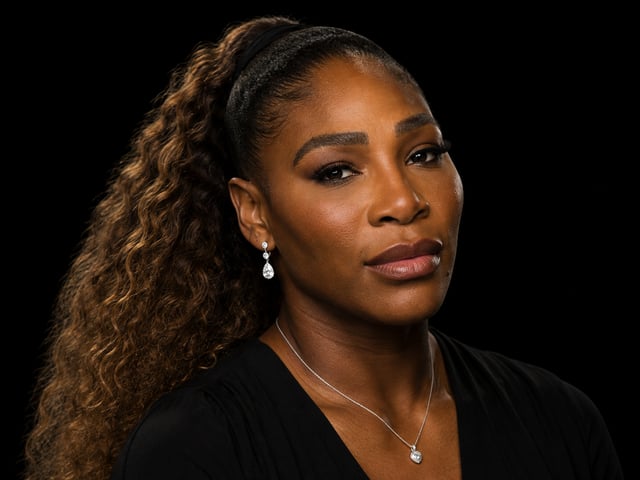
Serena Williams — 23 Grand Slam singles titles, the most in the Open Era

Athletes

🇺🇸 Serena Williams(b. 1981)

23 Grand Slam singles titles, the most in the Open Era

Serena Williams redefined tennis, accumulating 23 Grand Slam singles titles and building a business empire with an unparalleled competitive fire.

I really think a champion is defined not by their wins.

10 Courses · 60 Lessons · 8 Hours

30-day money-back guarantee

Biography

The story of Serena Williams, from the beginning.

01

Origins

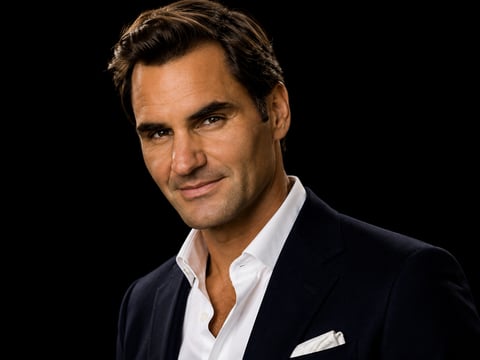
Serena Williams (1981-09-26–present) did not arrive at the top of athletes through privilege or a shortcut. The early years were unglamorous: long stretches of obscurity, work nobody applauded, and an obsession with a single question that most people around them considered a strange thing to care about. What separated them from equally talented peers was not raw ability but the decision, taken very early, to go deeper than anyone else was willing to go on champion's confidence — and to keep going long after the initial excitement wore off.
02

The turning point

Serena Williams redefined tennis, accumulating 23 Grand Slam singles titles and building a business empire with an unparalleled competitive fire. That is the moment the trajectory changes. Until then they were a promising name; afterwards they became the reference point. The insight itself was simple enough to explain in a sentence, which is exactly why it was so easy for everyone else to dismiss it. They did not dismiss it: they bet their time, their reputation and often their money on it, and then defended it publicly while it was still unproven. 23 Grand Slam singles titles, the most in the Open Era

03

The rise

What followed was a body of work built over years, not months, concentrated on champion's confidence, pressure management, resilience. Each phase came with public setbacks — a failed project, a period of stagnation, a decision the market or the press punished before it was proved right. They kept the same standard through all of it. The record people admire today is not a single lucky breakthrough but the compounding of hundreds of unglamorous decisions made in the same direction, repeated while competitors rotated to whatever felt easier that year.

04

The method

Their approach — Elite Performance & Resilience — reduces to a handful of rules applied with unusual discipline: absurdly high standards on quality, honest measurement of results, the willingness to kill what is not working early, and the courage to double the commitment to what is. In practice this means working relentlessly across champion's confidence, pressure management, resilience, handling defeat, comeback mindset, turning abstract principles into daily routines. They optimise for the decisions that matter most and deliberately ignore almost everything else, which is why their output looks simple from the outside and is nearly impossible to copy from the inside.

05

Setbacks and the cost

No serious career is linear, and theirs was not either. There were years of doubt, rivals who moved faster, criticism from people whose opinion mattered to them, and at least one moment where quitting would have been the reasonable choice. The interesting part is not that they suffered these things but how they processed them: as information rather than as verdicts. Mistakes were dissected in public, assumptions were rewritten, and the method that made them famous is largely a list of scars turned into rules.

06

What you actually learn from them

Studying Serena Williams is not about imitating a personality; it is about extracting transferable judgement. How they decided what to work on, how they evaluated risk, how they handled being wrong, how they built the people and systems around them, and how they protected the long horizon against short-term pressure. Those judgements travel across industries — that is why their frameworks still hold up decades after the specific context that produced them disappeared.

07

Today and the legacy

Their influence now exceeds their own results: the approach is studied, imitated and taught, and entire careers have been built on ideas they made ordinary. At Tiptico we have gone through their decisions, interviews, letters and failures and rebuilt them as step-by-step frameworks you can apply to your own work — the reasoning, not just the highlights.

His library

10 courses on how Serena thinks.

10 Courses · 60 Lessons · 8 Hours. Select a course to see every lesson inside it.

New to Serena? Start here

The First Serve: Dominating Your Inner Game

Master the emotional control and focus required for peak performance.

Beginner

Intermediate

Deep Dive

Beginner

The First Serve: Dominating Your Inner Game

6 lessons

  • 01

    Channeling the Roar: Pressure as Fuel

    8 min read
  • 02

    The Power of the Ritual: Pre-Match Mental Architecture

    8 min read
  • 03

    Silence the Noise: Focus in High-Stakes Moments

    8 min read
  • 04

    Resetting the Rally: Recovering from Errors

    8 min read
  • 05

    Match Point Mentality: Closing Under Pressure

    8 min read
  • 06

    Post-Match Playbook: Learning from Victory and Defeat

    8 min read

Tiptico courses are independent educational analyses based on publicly available information, writings, interviews, speeches and documented decisions. The individuals featured are not instructors, employees, partners, sponsors or endorsers of Tiptico unless explicitly stated.

Join Tiptico

Serena Williams and 100+ other Minds.

One membership at $49/month: the entire catalog, new Originals every month, cancel anytime.

  • Access to the entire library
  • New Originals every month
  • Guided learning paths
  • 30-day money-back guarantee
Start Membership — $49/month